



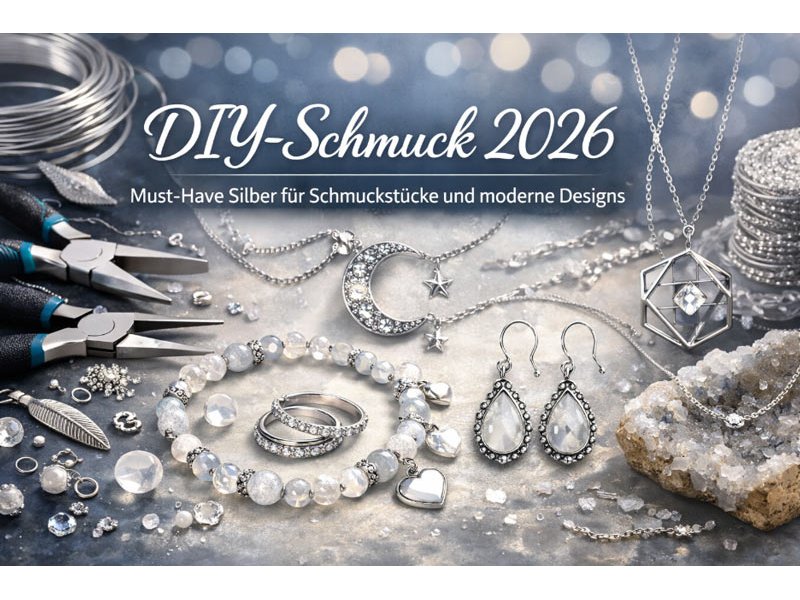
Silver will also be one of the most in-demand materials for jewellery in 2026. It is durable, elegant and extremely versatile. Whether you prefer minimalist chains, statement rings or delicate, filigree earrings – silver works with all designs. If you value high-quality materials in jewellery, silver is therefore a must. Here you’ll find everything you need to know about the material, along with some inspiration for your next DIY silver jewellery project.

Silver for jewellery: What types are there?
When you make jewellery yourself, the material naturally has a big impact on appearance, durability and price. When we talk about silver for jewellery, popular options include classic 925 sterling silver, silver-plated brass or silver-plated surgical steel. Each material comes with its own distinct advantages.
Sterling silver is the classic choice: shiny, durable and skin-friendly. It consists of 92.5% silver and 7.5% copper, which gives it added strength. Silver-plated brass is more affordable, yet still looks elegant and gives your jewellery a beautiful silver shine. For sensitive skin or allergy sufferers, silver-plated surgical steel is also an excellent option. It is robust, hypoallergenic and long-lasting.
In short: sterling silver offers the highest shine, brass is budget-friendly, and surgical steel stands out for its durability and skin compatibility.
The advantages of silver as a jewellery material
Silver is not only beautiful, but also a very practical jewellery material. It is allergy-friendly, easy to care for and combines beautifully with other materials such as semi-precious stones, pearls or leather cords. In addition, silver is extremely durable – with proper care, a piece of jewellery can last a lifetime.
Another major advantage is its versatility in jewellery making. Silver can be oxidised, polished or matt-finished, giving each design its own unique character. It is also easy to work with, making it ideal for DIY projects. You can easily saw, bend, solder or use it as a base for pendants.
Inspiration for silver components in DIY projects
If you want to get creative with your DIY projects, the range of silver components and their possible uses is almost limitless. In addition to bracelets, you can also create rings, earrings or necklaces using silver.
For example, you can use silver pendants & charms, which are perfect for bracelets or chains.
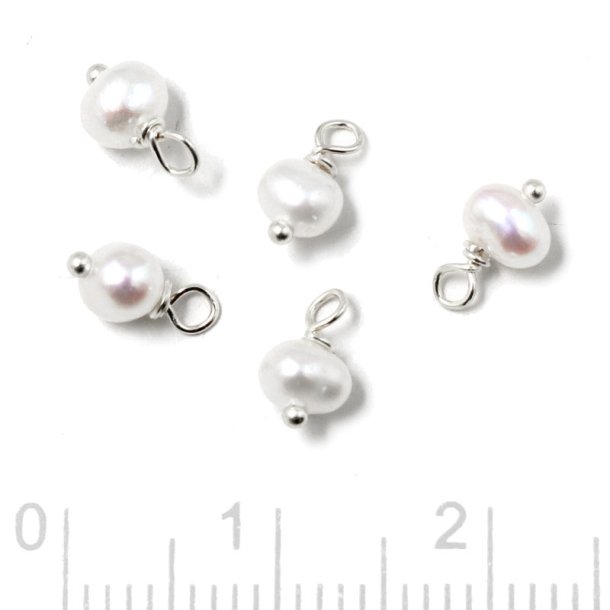
Blackened silver or silver-plated brass adds an exciting contrast to your designs. These materials are ideal for creating cool layering bracelets or multi-strand necklaces that feel both elegant and individual. Small pearls, drops or buttons made from silver or silver-plated materials are also perfect for earrings, rings or charming pendants.
For an elegant, delicate style, you can use silver-plated bead caps or filigree pendants. They pair beautifully with fine chains or delicate bracelets and give your jewellery a refined, high-quality finish.
Silver tubes & spacers help you create space between beads or stones, allowing individual elements to stand out more clearly. This not only enhances the look of your jewellery, but also adds structure and variation.
With such a wide variety of silver components available, your creativity has no limits. Experiment with different combinations, shapes and finishes, and create your own truly unique pieces of jewellery.
Why silver is so versatile for DIY jewellery
Silver has been a lasting trend for good reason. It is flexible enough for modern designs, allowing you to create both minimalist and bold jewellery pieces. Especially when combined with geometric shapes or natural elements, silver feels timeless yet contemporary. DIY jewellery projects using silver are a perfect way to add a personal touch.
Silver can also be easily combined with other precious metals such as gold or rose gold. This makes it easy to create layering bracelets or multi-strand necklaces that look both elegant and playful. Pairing silver with colourful semi-precious stones or small pearls also creates a modern look.
One tip: always choose high-quality silver components for your DIY projects. Cheaper materials often look less refined and can tarnish or break more quickly. With good-quality silver, you’ll enjoy your jewellery for much longer – and it’s also easier to work with.
How to combine and care for silver
To keep your DIY jewellery looking beautiful for a long time, proper care is essential. Silver can tarnish over time, especially when exposed to moisture or perfume. Therefore:
- Polish regularly with a soft cloth to maintain its shine.
- Store in a dry, airtight bag when not in use.
- Avoid contact with harsh cleaning products.
- Use special silver cleaners when needed, ensuring they are gentle on the surface.
DIY silver jewellery trends for 2026
In the coming year, designers are focusing on clean lines, minimalist shapes and natural elements. Particularly popular trends include:
- Layering bracelets made from different silver chains
- Combining silver with semi-precious stones such as amethyst, jade or rose quartz
- Minimalist chains with single pendants
- A mix of polished and matt silver for contrast
We will publicly show your name and comment on this website. Your email is to ensure that the author of this post can get back to you. We promise to keep your data safe and secure.