



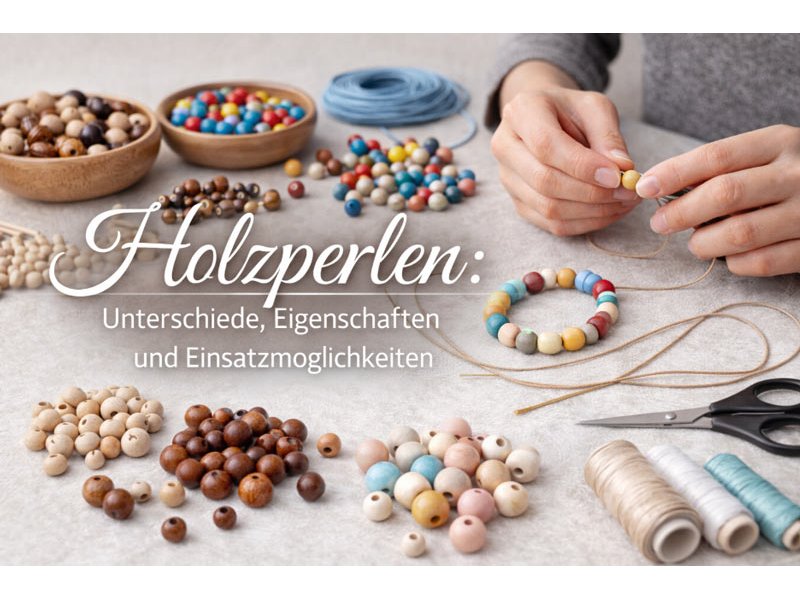
Make your own jewellery with wooden beads, tools and ready-made DIY jewellery components
Wooden beads are among the most versatile materials in jewellery making. You can use them for bracelets, necklaces, earrings, keyrings or even DIY décor. With wooden beads you can create almost anything, and they are lightweight, comfortable on the skin and have that natural charm. They come in all shapes and colours: round, oval, colourful, left natural or decorated with ethnic ornaments.
Every bead tells its own little story and makes your jewellery piece something special. In this article, we take a look at wooden and bone beads, explain how they differ, what properties they offer, and how best to work with and care for them. Plus, you’ll get plenty of inspiration.
History and tradition of wooden and bone beads
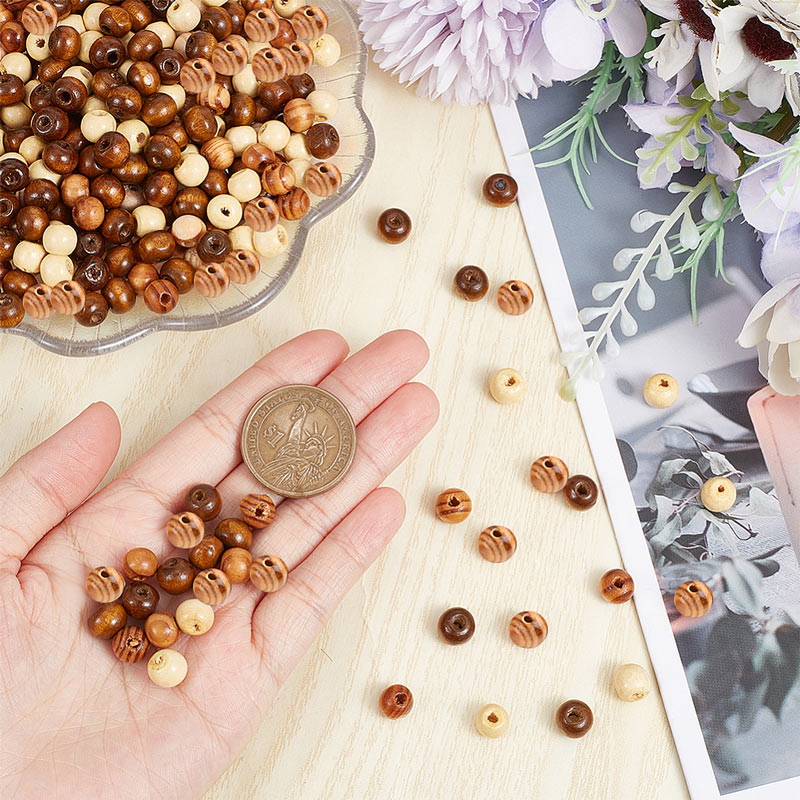
Thousands of years before today’s industrially produced jewellery existed, people used natural materials such as wood, bone or stones to adorn themselves. Archaeological finds show that bone beads were already used in prehistoric times. They often had a spiritual or symbolic meaning and served not only as decoration, but also as a status symbol.
Wooden beads are comparatively more “modern”, but still a classic material. Many cultures, especially in Africa, Asia and South America, used wooden beads early on for necklaces, bracelets and ritual strands. The combination of lightness and natural aesthetics made wooden beads a fantastic material for jewellery—both functional and decorative.
Material properties of wooden beads
Wooden beads offer several advantages compared with other materials such as glass or plastic:
- Lightweight: Wooden beads are very light. This makes it possible to create long necklaces and bracelets that are still comfortable to wear and don’t feel heavy on the neck or wrist.
- Skin-friendly: Wood is a natural material, so it typically doesn’t trigger allergies and is suitable even for sensitive skin.
- Many shapes and colours: Round, oval, cylindrical or decorated with ethnic ornaments: wooden beads come in countless variations. Many manufacturers also dye or lacquer wooden beads.
- Sustainability: Compared with plastics, wood is a renewable resource, making it a more environmentally friendly choice.
Another practical tip: If the hole in a wooden bead is too small for the cord you want to use, you can easily widen it with a small drill. That’s not as easy with other materials.
Characteristics of bone beads
Bone beads have something truly special about them. They differ both visually and in feel from wooden beads:
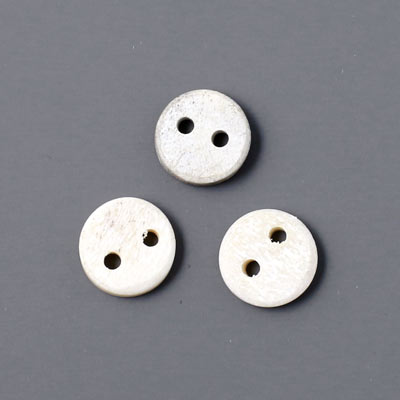
- Natural colour and grain: Bone has its own slightly creamy or beige colour and a distinctive grain that makes every single bead unique.
- Durability: Bone beads are robust and long-lasting. Even with frequent use, they retain their shape.
- Versatility: Besides jewellery such as necklaces or bracelets, bone beads can also be used on bags, keyrings or decorations—they can handle a lot.
Like wooden beads, bone beads develop a beautiful patina over time. This gives them a rustic, warm and individual look, making them perfect for handmade jewellery with character.
Combining wooden and bone beads
A particularly beautiful and natural effect can be achieved by combining wooden and bone beads. The interplay between the warm tone of wood and the light or creamy colour of bone creates an interesting contrast that still works harmoniously—because both are natural materials.
Wooden and bone beads also pair well with other rustic natural materials such as leather or cotton cord. A bracelet or necklace made from wooden beads, bone pendants and leather cord looks natural, authentic and still stylish.
Feel free to experiment with different sizes, shapes and colours. Alternating round wooden beads with small bone beads, or using large decorated wooden beads as statement pieces, can create designs you can develop further to match your personal style.
Different types of wooden beads
Wooden beads come in many variations—not only in shape, colour, finish and size, but also depending on the type of wood used. Each type has its own charm, properties and uses:
- Coconut beads: These beads are made from the hard shell of coconuts. They are robust, often have two tones and a natural texture. Coconut beads are especially suitable for rustic jewellery, bracelets and necklaces with a natural ethno look.
- Nepal nut beads: Finely crafted nut beads often come from Nepal or India and frequently have an uneven surface. They are ideal for delicate bracelets, spiritual necklaces and decorative accents.
- Colourful wooden beads: In addition to natural tones, there are also dyed wooden beads in all imaginable colours. They’re perfect for cheerful, playful jewellery or children’s projects—from pastels to bold colours.
- Pine wood beads: Pine is lightweight, affordable and easy to work with. Pine wood beads are often natural-coloured or light brown with visible wood grain and are easy to combine with many styles. Their smooth surface looks elegant when paired with leather, cotton or metal.
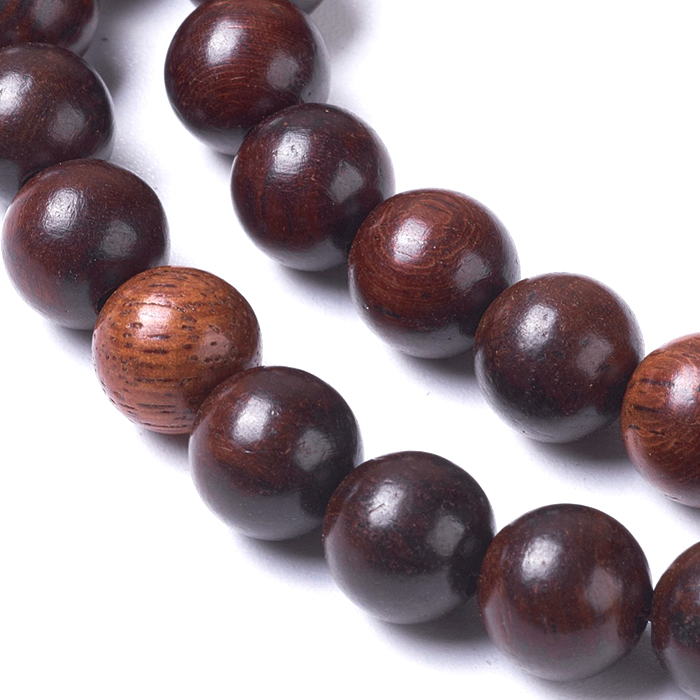
- Olive wood and other exotic woods: For higher-end jewellery, beads made from olive wood, sandalwood or rosewood are also used. They have especially beautiful grain patterns, warm colours and are often used for elegant, long-lasting pieces.
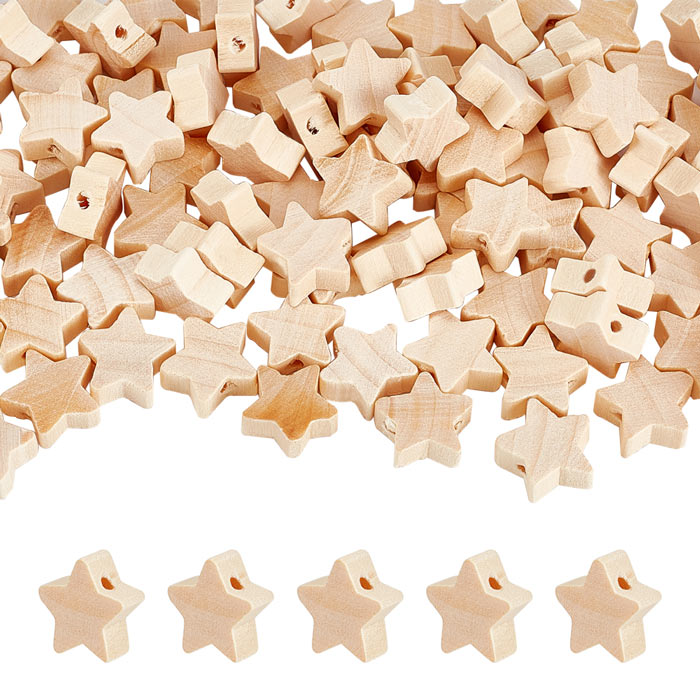
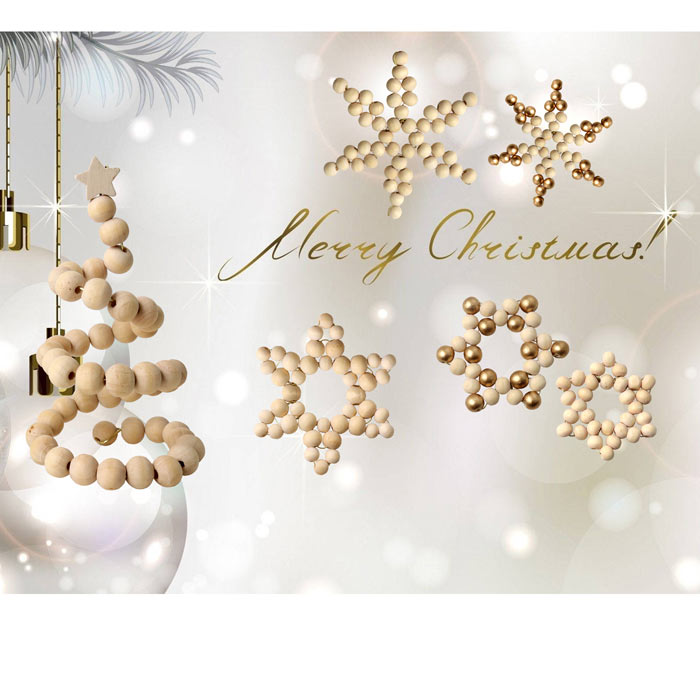
- Decorated or ornamented wooden beads: Many wooden beads are carved, engraved, shaped or patterned with ethnic motifs. These beads are eye-catchers in necklaces and bracelets and add character to any piece. They’re also great for special DIY projects (e.g. at Christmas)—in gold or silver tones or in a star shape.
Whether you prefer natural wood tones, love exotic grain patterns or want to add colourful accents, there’s a wooden bead for every idea. When you experiment, you’ll discover that different wood types, shapes and colours can be combined to create jewellery pieces that are truly one of a kind.
Creative ways to use wooden beads
Wooden and bone beads can be used for much more than classic jewellery like necklaces and bracelets. Their versatility makes them suitable for many creative projects:
- Earrings: Small wooden beads combined with metal or glass beads create lovely earring designs.
- Keyrings and bag charms: Beads are ideal for DIY accessories that are both decorative and durable.
- Decoration: Wooden beads are also perfect for home accessories, such as curtain strands, DIY coasters, DIY lamps or decorative branches—especially for Christmas.
- Children’s projects: Thanks to their light weight and skin-friendly nature, wooden beads are ideal for children’s craft projects.
Tips for working with wooden and bone beads
If you’re working with wooden or bone beads yourself, there are a few points to keep in mind so the result is durable, well-fitting and stable:
- Check the hole size: Make sure the cord or ribbon fits through the bead hole. If necessary, widen the hole carefully.
- Combine materials: Wooden and bone beads pair well with metal, glass, leather or cotton.
- Surface treatment: Wooden beads can be left untreated or finished with oil, wax or varnish to intensify colour, add shine and increase durability.
- Let patina develop: Both wood and bone develop a natural patina over time. This gives the jewellery a rustic, charming look.
Caring for wooden and bone beads
To keep your jewellery looking beautiful for a long time, a little care now and then is worthwhile:
- Store dry: Moisture can damage wooden and bone beads, so it’s best to store them in a dry place.
- Clean gently: Wipe with a soft cloth when needed. Please avoid harsh cleaning products.
- Oil or wax: Wooden beads can occasionally be treated with a little wood oil or beeswax to protect the surface and enhance the colours.
- Handle bone beads carefully: Avoid knocks or sharp edges to prevent cracks or breaks, even though bone beads are generally robust.
Trends and inspiration for 2026
Wooden and bone beads are making a comeback right now—not only in the DIY world, but also among professional jewellery designers. Natural, minimalist designs and ethno-inspired patterns are especially popular. Large round wooden beads, ornamented spheres or small bone beads used as accents are also very common.
Pairing them with other sustainable materials such as cotton ribbons, recycled leather or natural stone is another current trend. This creates jewellery that feels both modern and more environmentally friendly.
Longer necklaces or bracelets made from uniform, single-colour wooden beads are also in demand—especially for men. They remain lightweight but still make a statement. Wooden beads are ideal for this: they don’t feel heavy and can easily be strung in larger quantities.
DIY ideas: Make your own jewellery with wooden beads
There are plenty of ways for both beginners and experienced makers to get creative with wooden and bone beads:
- Layering bracelets: Mix beads in different sizes and colours, string them on elastic cord, and secure the knot.
- Ethno necklaces: Alternate large decorated wooden beads with small bone beads on a cord.
- Personalised keyrings: Combine letter beads or motif beads made of wood, for example for initials or short statements.
- Gift ideas: Handmade beaded bracelets or necklaces make wonderful personal gifts.
The key is to pay attention to the combination of colours, sizes and shapes while stringing, so you create a harmonious overall look.
Nature is on trend
Wooden and bone beads combine naturalness, lightness and versatility and offer countless options for creating personalised jewellery, DIY décor or accessories—whether as a classic necklace, a layering bracelet, earrings or a keyring.
They’re especially appealing to anyone who prefers sustainable materials and values skin-friendliness. Over time, they also develop a beautiful patina that adds character and a rustic feel to every piece.
If you’re looking for new DIY projects in 2026, you should definitely try wooden and bone beads. They’re light, robust, versatile and can be combined with almost any material.
We will publicly show your name and comment on this website. Your email is to ensure that the author of this post can get back to you. We promise to keep your data safe and secure.