



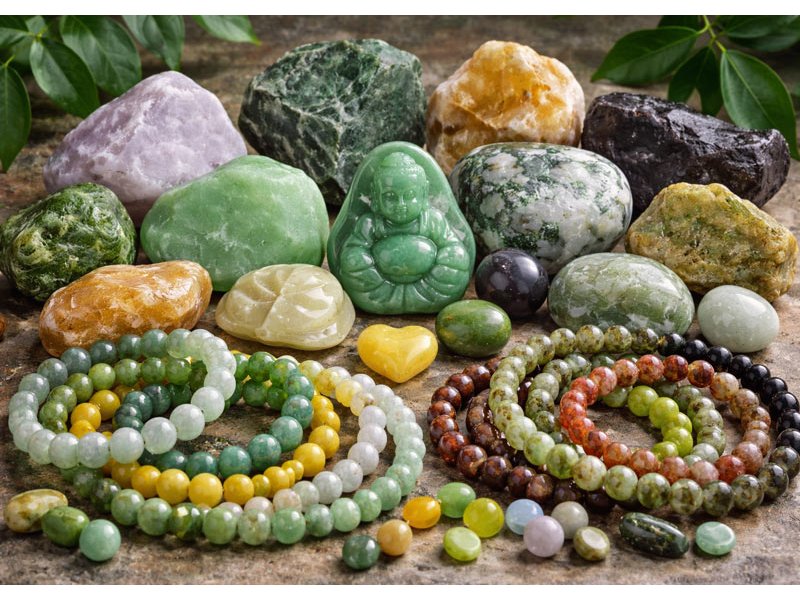
Jade is the common name for two closely related, but different, silicate minerals: nephrite and jadeite. Nephrite belongs to the amphibole group and is rich in calcium and magnesium, while jadeite is a pyroxene mineral made primarily of sodium and aluminium. Although they look similar, they form in different geological settings and have distinct internal structures. Jadeite is often the rarer and typically commands higher prices—especially when it shows strong translucency and an intense green hue. Nephrite, on the other hand, is famous for its tightly interwoven, fibrous structure, which gives it exceptional toughness and a characteristic soft, “oily” sheen. Beyond its beauty and durability, jade has carried deep cultural and symbolic value for centuries, appearing in art, jewellery, ritual objects, and traditional practices across many regions. Jade beads in many colours.
Physical Properties of Jadeite vs. Nephrite
| Category | Jadeite (pyroxene jade) | Nephrite (amphibole jade) |
|---|---|---|
| Chemical Formula | NaAl(Si2O6) | Ca2(Mg,Fe)5Si8O22(OH)2 |
| Crystal System | Monoclinic | Monoclinic |
| Mohs Hardness | 6.5–7.5 | 6.0–6.5 |
| Specific Gravity | 3.30–3.36 | 2.9–3.1 |
| Refractive Index | 1.650–1.670 | 1.606–1.632 |
Jadeite
Jadeite is sometimes referred to as “Myanmar jade” because Myanmar is the leading source of fine-quality jadeite on the global market. Many people value jadeite for its smooth polish, high toughness, and—at its best—its strong translucency. The most celebrated colour is a vivid emerald green often called imperial jade, but jadeite can also occur in lavender, white, yellow, grey, and even black tones. In jewellery, jadeite is commonly cut as cabochons or shaped into beads and bangles to showcase its colour and glow.
Spiritual Properties: Jadeite is often associated with vitality, protection, and attracting prosperity in feng shui. It is also linked to clarity, intuition, and creative inspiration in modern crystal traditions.


Nephrite Jade
Nephrite is prized for its silky-to-oily lustre and outstanding toughness, which comes from its dense, fibrous structure. It appears in a wide range of colours—most commonly green and white, but also yellow, brown, and black. In many historical contexts, nephrite was favoured for carvings and symbolic objects because it is difficult to break and takes a beautiful, lasting polish. A well-known premium variety is Hetian (Hotan) nephrite from Xinjiang, China, appreciated for its cultural heritage and refined appearance.
Spiritual Properties: Nephrite jade is frequently connected with calm, balance, and resilience. Some traditions also associate it with supportive energy for wellbeing (including kidney-related symbolism), though these claims are not medically proven.

Black Jade
“Black jade” is a colour description rather than a single mineral type. It can refer to dark jadeite or dark nephrite, and the body colour may range from deep green-black to near-black. Dark jade is valued for its dramatic look and smooth finish, and it can be used for everything from minimalist jewellery to bold statement pieces. In some stones, subtle green undertones become more visible in strong light.
Spiritual Properties: Black jade is commonly linked with grounding and protection. Many people view it as a stabilising stone that helps “absorb” negativity and support emotional steadiness.

Chinese Jade
“Chinese jade” is sometimes used in the bead trade for jade-like stones that show yellow-green to deep green shades and a smooth, waxy polish. The material can display distinctive wispy patterns or streaking that gives each piece a slightly different character. Because naming conventions vary, it’s a good idea to confirm whether a specific product is nephrite, jadeite, or another jade-like stone when accuracy matters.
Spiritual Properties: Chinese Jade (and similarly named varieties such as Canadian or Taiwan jade) is often associated with confidence, independence, and personal strength. It is also linked with abundance and a more optimistic mindset in modern crystal beliefs.

Taiwan Jade
Taiwan jade is also marketed under names like “Southern jade” or “Chinese jade” in some contexts. It is typically recognised by its fresh green colour and contrasting black wisps, streaks, or flecks. These darker markings can create a natural, painterly look—especially in beads and cabochons.

African Jade
African jade—also sold as budstone—is a jade-like quartzite rather than true nephrite or jadeite. It is typically opaque and ranges from pale green to deeper forest tones. Much of the material on the market is sourced from Southern Africa, and it is popular for beads because it can be cut, shaped, and polished into durable pieces with an earthy colour palette.
Spiritual Properties: African jade is often associated with relaxation, emotional harmony, and supportive energy for friendships and long-distance bonds. Some also connect it with compassion and “manifesting” intentions in contemporary crystal culture.


New Jade
New jade is widely used in jewellery for its gentle, light green colour. It typically has a smooth feel and a soft, waxy-to-oily shine, and it can appear slightly translucent depending on the cut and thickness. It’s a popular option for fresh, spring-like designs and pairs well with silver or white gold tones.
Spiritual Properties: New jade is often described as soothing and heart-centred, associated with emotional cleansing, meditation, and restoring a sense of calm during stressful periods. Some traditions link it with the heart chakra and with Gemini symbolism.

Topaz Jade
Topaz jade—sometimes marketed as “old yellow jade”—describes jade-like material in warm shades such as yellow, honey, reddish-orange, or brown. It is valued for its creamy colour range and smooth polish, and it can be especially striking in faceted accents or as focal beads in autumn-toned designs.
Spiritual Properties: Often associated with abundance and confidence, topaz jade is linked with positive momentum, creativity, and mental focus in contemporary crystal beliefs.

Yellow Jade
Yellow jade naturally ranges from pale buttery tones to deeper golden shades. It is usually smooth with a soft lustre, and transparency can vary from slightly translucent to fully opaque. Dyed yellow jade often looks more saturated and uniform, sometimes with a brighter surface shine.
Spiritual Properties: Yellow jade is commonly linked with optimism, emotional steadiness, and creative energy. Many people also associate it with good fortune and a more confident, positive outlook.

Golden Silk Jade
Golden Silk Jade is a jade-like, cryptocrystalline quartzite material that commonly shows white, yellow, and red tones. It tends to polish smoothly and may appear anywhere from translucent to opaque. Its “silk” name often refers to gentle, flowing patterning or tonal transitions within the stone.
Spiritual Properties: Traditionally, golden silk jade is associated with luck and protection. It is also linked with purity, warmth, and supportive “bright” energy in modern interpretations.

Xiuyan Jade
Xiuyan jade (also seen as “xiu jade”) is widely appreciated for its workable toughness and attractive natural colours. Depending on the piece, it may look translucent or opaque, which makes it suitable for both detailed carving and polished jewellery components.
Spiritual Properties: Xiuyan jade is often connected with purity, integrity, and inner clarity. In spiritual traditions, it is linked with meditation, intuition, and inviting prosperity and harmony.

Lemon Jade
Lemon jade is known for its lively lemon-yellow colouring. It may be translucent or opaque and typically has a smooth surface with a soft, waxy shine. It’s often chosen to add a bright, cheerful accent to beadwork and summer-inspired designs.
Spiritual Properties: Lemon jade is commonly associated with joy, warmth, and personal confidence. Many people link it with solar plexus symbolism and supportive energy for self-care—often mentioned for Leo themes.

Olive Jade
Olive jade displays natural olive-green tones that can appear translucent or opaque. Its surface is typically lustrous and smooth, and colour depth may vary within the same strand, creating a rich, organic look.
Spiritual Properties: Olive jade is often described as calming and emotionally cleansing. It is commonly linked with easing worry, supporting hopefulness, and attracting good luck in contemporary crystal traditions.

Peace Jade
Peace jade is not a true jade mineral. It is typically described as a blend of minerals such as serpentine, stichtite, and white quartz, creating a gentle palette of soft whites and pale greens. It is often chosen for designs that aim for a light, soothing look.
Spiritual Properties: Peace jade is commonly associated with calming, comforting energy. Many people connect it with easing stress and supporting sensitive individuals, while linking it with heart- and crown-themed symbolism.

Flower Jade
Flower jade, also sold as Afghanistan jade, typically has a smooth polish and a translucent-to-opaque appearance. Natural tones often include cream, yellow, and brown. Because it is dense and hard, it is widely used for beads. Dyed versions can appear especially bright and uniform in colour.

Plum Blossom Jade
Plum Blossom Jade is recognised for its striking, flower-like patterning. Background colours may include black, brown, red, or grey-green, and the stone is typically dense and durable with an opaque look. It’s a popular choice when you want bold natural patterning in statement jewellery.
Spiritual Properties: Plum Blossom jade is often associated with uplifting energy and creating balance in the home. In modern spiritual use, it is linked with heart-centred healing, compassion, and a stronger connection to guidance or intuition.

White Jade / Malaysian Jade
White jade (often marketed as Malaysian jade) is commonly described as fused quartz crystal that has been coloured with dyes. It is valued for its smooth feel, soft lustre, and translucent look. Many dyed beads are produced to deliver consistent, long-lasting colour and a durable surface suitable for everyday jewellery.


Green Jade
Green jade in the bead trade is often a dyed material with a smooth texture, soft lustre, and a translucent body. Compared with white-dyed varieties, green options are frequently described as tougher and more durable. High-quality dyed beads aim for stable, even colour and a consistent polish.

Persian Jade
Persian jade is typically a dyed natural gemstone sold for its vivid colour and smooth, waxy shine. Beads often have an opaque pale base with distinctive patterning, creating a decorative, “exotic” look that stands out in jewellery designs.
Spiritual Properties: Persian jade is often linked with emotional balance, protection, and a brighter mindset—supporting joy, love, and mental clarity in modern crystal beliefs.

Mashan Jade
Mashan jade (also marketed as mountain jade or candy jade) is commonly described as a marble-type material known for its fine grain and dense structure. This density helps it resist everyday wear, while its opaque, saturated colours can remain visually strong over time.


We will publicly show your name and comment on this website. Your email is to ensure that the author of this post can get back to you. We promise to keep your data safe and secure.