



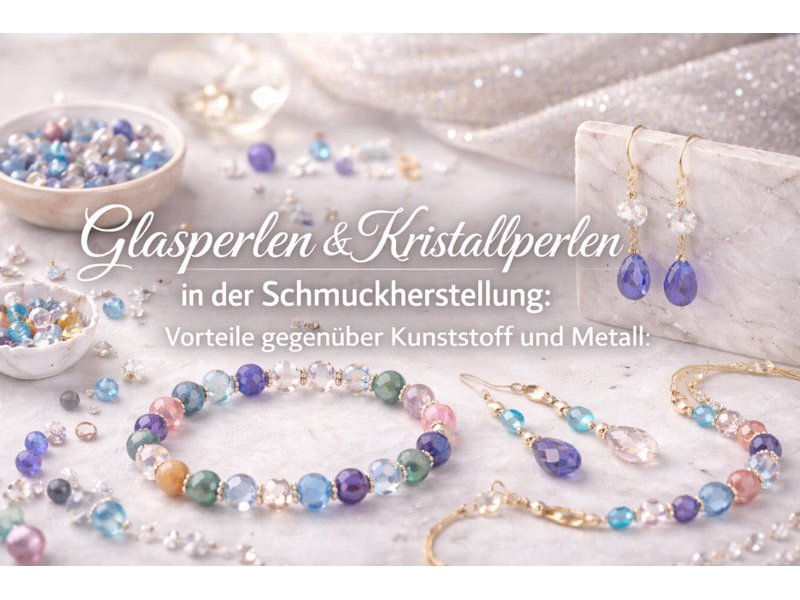
Glass beads are a timeless favourite in jewellery making: classic, versatile, and pleasantly lightweight. They’re ideal for necklaces, bracelets, earrings, and all kinds of creative DIY projects—often looking more elegant than plastic or metal. Crystal beads add extra brilliance and strong light reflections, instantly elevating the finish. In this guide, we explore the differences, benefits, materials, and best uses for glass and crystal beads, plus care tips and inspiration for your next DIY jewellery project.
History of glass beads
Glass beads have a long tradition. Even in ancient times, they were used for jewellery, clothing, and religious objects. In particular, glass beads were highly valued trade goods in Egypt, Mesopotamia, and along the Silk Road. They weren’t only decorative—many also served as status symbols.
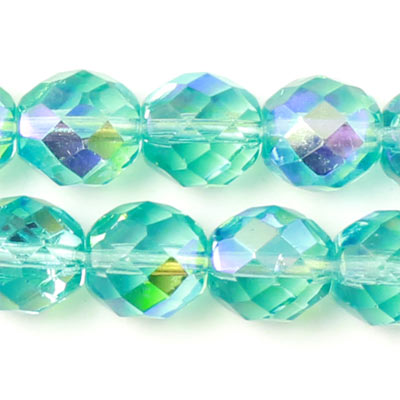
Crystal-style beads with especially clear light refraction became popular in Europe from the 17th century onward. Workshops in Bohemia and Murano produced glass beads in countless shapes, colours, and cuts—and many of these techniques are still used today.
This long history shows one thing clearly: glass beads aren’t just beautiful—they’ve stood the test of time for thousands of years and never lost their appeal.
Manufacturing and processing
Glass beads can be handmade or produced by machine. Common methods include:
- Casting: molten glass is poured into moulds, cooled, and polished.
- Winding (lampwork): glass rods are heated and shaped around a metal mandrel.
- Grinding and faceting: especially for crystal-style beads, to create a sparkling play of light.
Hole sizes vary depending on your jewellery design. If needed, larger beads can be drilled slightly wider with a small hand drill to fit thicker cords or ribbons.
Benefits of glass and crystal beads vs plastic and metal
Glass beads and crystal-style beads offer several clear advantages over other materials:
1. Light refraction and shine
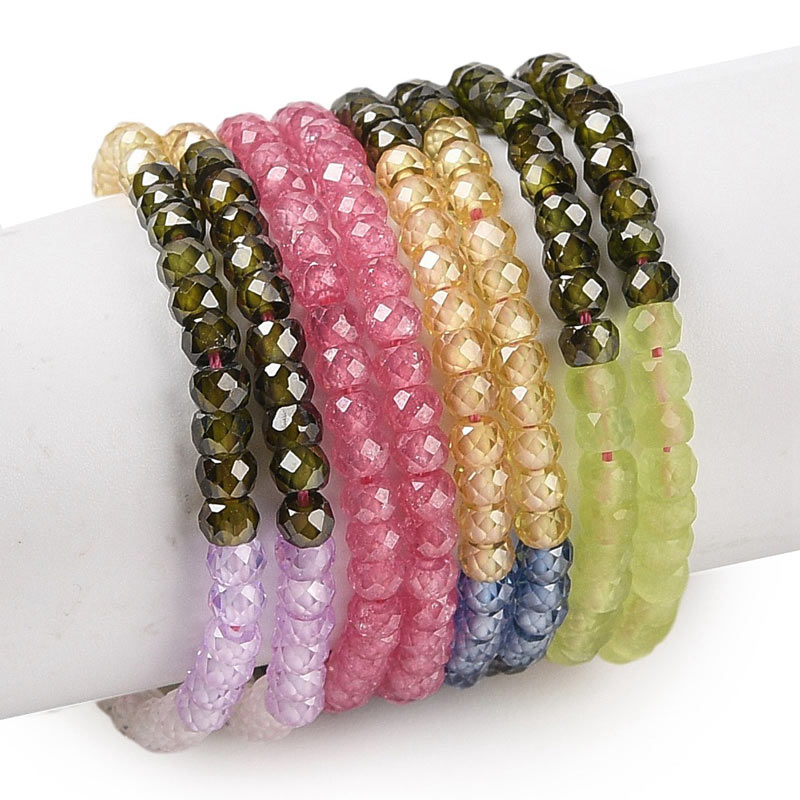
Glass beads reflect light in a way plastic beads rarely match. They look luxurious without feeling heavy or being expensive. Faceted glass and crystal beads create a brilliant sparkle that enhances any DIY bracelet or necklace.
2. Durability
Glass beads keep their colour for years and are less prone to wear than plastic or many metals. Under extreme pressure they can chip, but in everyday use they’re reliable and long-lasting.
3. Skin-friendly
Many metal beads can trigger allergies. Glass is a great choice for sensitive skin—perfect for children’s jewellery or pieces worn daily.
4. Sustainability
Compared to plastic, glass beads are more eco-friendly and easy to reuse. Choosing glass beads means investing in durable materials you can use again and again across many DIY projects and jewellery-making ideas.
Plastic can look cheap and quickly lose its shine, while metal may feel heavy or tarnish over time. Glass beads stand for aesthetics, comfort, and lasting quality.
Creative inspiration for glass bead projects
1. Layering
Stack multiple bracelets in different colours, shapes, or sizes.
- Combine a delicate bracelet with small glass beads and a chunkier bracelet with larger beads.
- Make sure the colours work well together for a harmonious look.
2. Add colour accents
Colours make every jewellery piece unique.
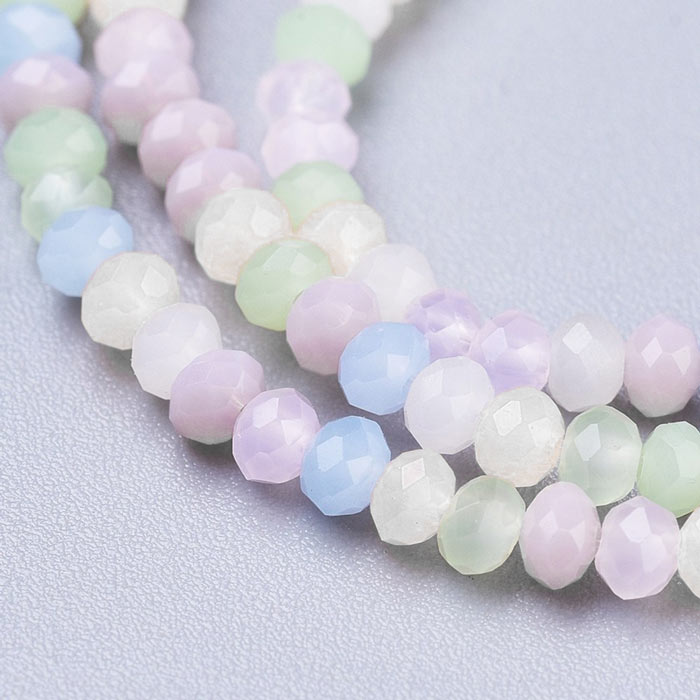
- Pastels like blush pink, mint, or light blue suit soft, feminine designs.
- Neon colours create a modern, bold look—ideal for trend-led DIY projects.
- Transparent shades, amber, or smoky grey are timeless and blend beautifully into elegant designs.
- Tip: repeat colours in small groups or create a gradient effect for extra polish.
3. Event specials
DIY glass bead projects are perfect as personalised gifts.
- For Christmas: make bracelets in red, gold, and green tones, or create bead charms for gift tags.
- For weddings: choose beads in the couple’s colours—for example, soft pastel shades for bridesmaid bracelets or single beads as guest favour charms.
- Personalise birthday gifts with letter, number, or motif beads.
Creative extras:
- Charms & pendants: add crystal charms for extra detail.
- Patterns & symmetry: repeating patterns or symmetrical layouts create a calm, balanced look.
- Texture & size: mix glossy, matte, and faceted finishes in different sizes for depth.
- Themed sets: summer (blue/turquoise), autumn (amber/brown), or festive holiday sets.
Are glass beads more delicate than other beads?
A common question in crafting and jewellery design is how durable glass beads are compared to other materials—after all, they’re made of glass.
Compared to plastic: glass beads are more shape-stable and keep their colour long-term. Plastic can fade or become brittle. Glass is harder, but can theoretically break if dropped or hit very hard.
Compared to metal: metal beads are often very robust, but heavier and may tarnish or lose their finish. Glass beads offer better wearing comfort and a refined look—especially for long necklaces or larger statement pieces.
Compared to wood or bone: wood and bone are less likely to shatter, but more sensitive to moisture. Glass is largely unaffected by environmental factors, though it should be protected from falls.
So glass beads aren’t “delicate”—they’re low-maintenance and durable, as long as you avoid unnecessary impacts. For jewellery worn regularly, they’re a reliable choice.
Types of glass and crystal beads, and materials
There are many styles and shapes of glass and crystal beads:
- Millefiori glass beads: from Italy, featuring colourful patterns.
- Czech glass beads: precisely faceted for sparkling designs.
- Colourful glass beads: great for playful jewellery and children’s projects.
- Frosted/matte beads: a softer look for elegant necklaces.
- Metallic glass beads: silver- or gold-coated, often used for festive designs.
- Celestial beads: an imitation of true crystal beads.
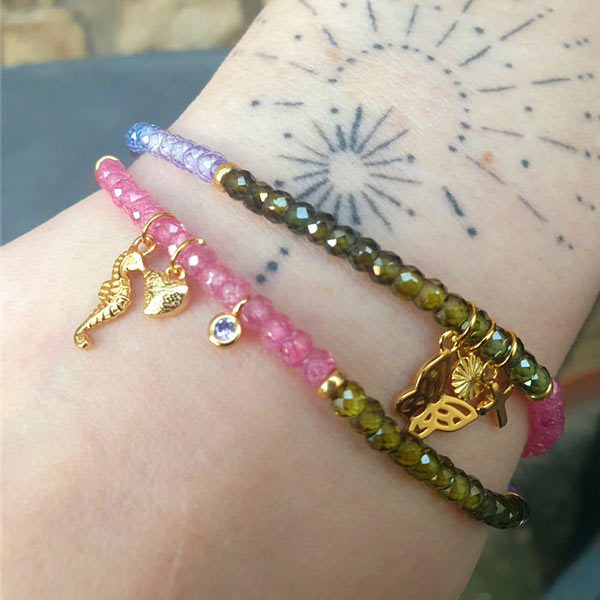
- Cubic zirconia: synthetic zirconium dioxide with intense sparkle—ideal as accents.
Ultimately, every bead is unique—perfect for one-of-a-kind jewellery pieces.
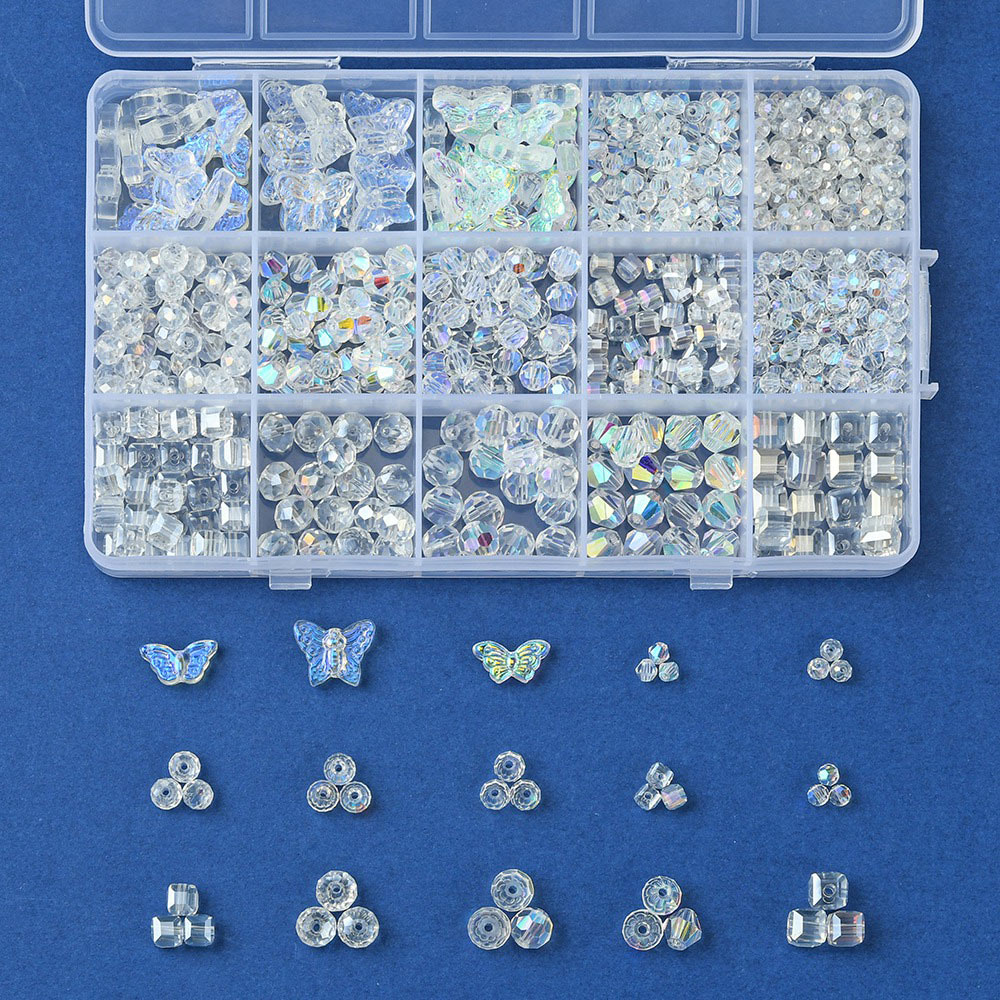
Are cubic zirconia beads the same as crystal beads?
Cubic zirconia is often mentioned alongside crystal or glass beads in jewellery making, but it’s a different material. Cubic zirconia is synthetic zirconium dioxide, developed as a high-quality diamond alternative. It’s known for strong light refraction and an intense, diamond-like sparkle.
Crystal beads, by contrast, are faceted glass. Their shine comes from precise faceting and the glass composition—not from a crystalline structure like cubic zirconia. That’s why crystal beads can look slightly more “glassy”, while cubic zirconia sparkles more sharply and clearly.
There are also practical differences: crystal beads typically have a hole and can be strung directly. Cubic zirconia doesn’t always have a hole and is often set or mounted in jewellery.
In jewellery design, they pair beautifully: glass and crystal beads create the base, while cubic zirconia adds targeted sparkle highlights.
DIY ideas with glass and crystal beads
DIY 1: Everyday elastic glass bead bracelet
Difficulty: easy
Time: approx. 15–20 minutes
Materials:
- Round or faceted glass beads or cubic zirconia (6–8 mm)
- Elastic jewellery cord
- Scissors
- Optional: small metal or crystal beads as accents
Step-by-step:
- Choose a colour scheme: pick a harmonious palette—pastels, a clean contrast pair, or colour mixed with gold/silver.
- String the beads: thread the glass beads onto the elastic cord. Optionally, place a statement crystal bead in the centre and arrange the remaining beads symmetrically.
- Secure the knot: tie a tight knot, then gently pull it into a bead so it’s hidden.
Variations:
- Layer multiple bracelets in different colours
- Use matte glass beads for a calmer look
- Add small charms or letter beads
Result: A light, comfortable bracelet—perfect for everyday wear and gifting.
DIY 2: Glass bead magnets for notes
Difficulty: very easy
Time: approx. 10–15 minutes
Materials:
- Glass beads
- Small round magnets
- Glue (epoxy or hot glue)
Step-by-step:
- Glue the beads: attach glass beads to the flat side of the magnets.
- Let dry: wait until the glue is fully cured.
- Use them: place on a fridge, magnetic board, or pinboard to hold notes and photos.
Variations:
- Mix different bead sizes
- Use letter or motif beads for personalised magnets
Result: Small magnetic accessories that add a decorative, personal touch to your home or office.
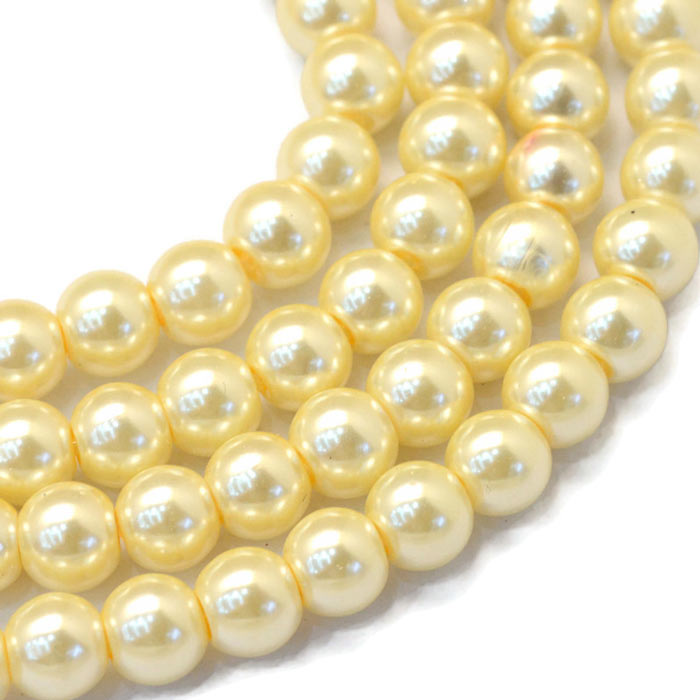
DIY 3: Elegant necklace with waxed glass beads (shell look)
Difficulty: easy to intermediate
Time: approx. 30–40 minutes
Materials:
- Waxed glass beads with shell finish (white, cream, or pastel shades)
- Small spacer beads in metal or crystal (optional, for extra sparkle)
- Jewellery wire or nylon thread
- Necklace clasp (lobster clasp or magnetic clasp)
- Crimp beads
- Round-nose pliers
- Scissors
Step-by-step:
- Decide the length: cut wire/thread to your desired length (e.g., 45–50 cm).
- String the beads: start in the centre with larger waxed glass beads, then use smaller ones towards the ends. Add spacer beads as accents if you like.
- Attach the clasp: slide on crimp beads, attach the clasp, and crimp firmly with pliers.
With glass beads, you can create endless DIY jewellery ideas—from simple bracelets to elegant necklaces and personalised gifts.
Glass and crystal beads look premium, feel lightweight, and last for ages—making them ideal for jewellery making and DIY projects. They suit many occasions and offer excellent value for money.
If you’re looking for fresh DIY projects or jewellery inspiration in 2026, glass and crystal beads are absolutely worth trying.
```
We will publicly show your name and comment on this website. Your email is to ensure that the author of this post can get back to you. We promise to keep your data safe and secure.